What Goes Wrong the First Time You Play Tower Rush
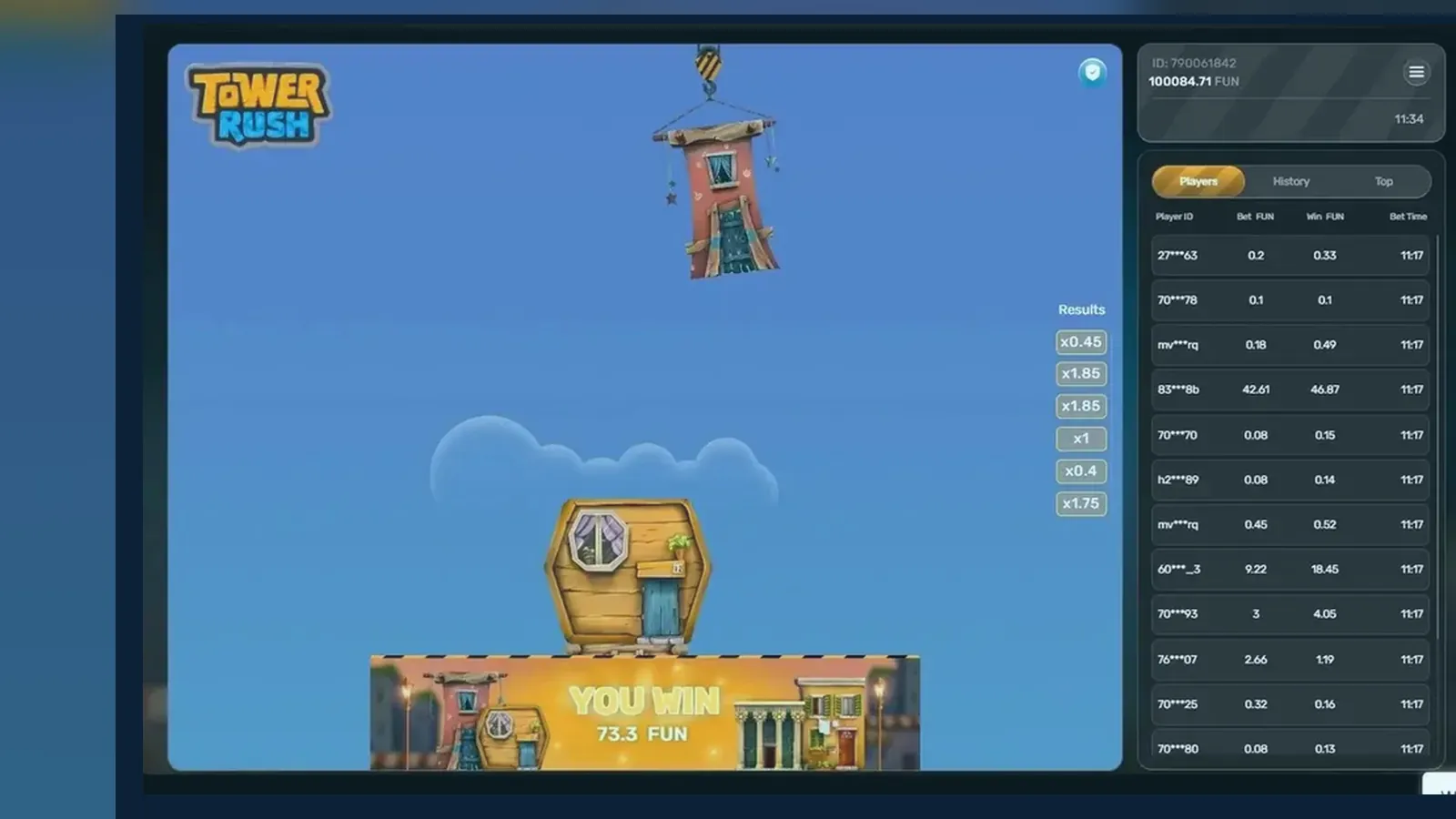
Most players lose their first few rounds not because the RNG hates them, but because they treat Tower Rush like a slot when it is not one. You pick the difficulty before the round starts, the multiplier climbs as you clear levels, and you cash out manually—or the tower collapses and you lose the stake. That last part catches people off guard.
This page walks through the certified original version, the mechanics that trip up beginners, the numbers from the technical sheet, and the ten-second check that confirms you are on the real game before you deposit. Tower Rush runs on UKGC-licensed sites serving players in the United Kingdom; affordability checks start from £150 net deposits a month, and stake caps sit at £5 per spin—or £2 if you are aged 18–24.
Who Made It and Where the Certification Sits
The original Tower Rush carries third-party RNG certification from an accredited testing lab—iTech Labs or eCOGRA, depending on the provider build. The certificate number appears in the game's info panel, usually alongside the paytable. Any site offering the game to UK players needs a UKGC remote licence; the licence number sits in the footer, and you can match it against the UK Gambling Commission public register in thirty seconds.
Clones circulate under similar names—Tower Climb, Rush Tower, Tower Crash—and skip certification entirely. They look close enough to fool a casual glance: same three-level grid, same cash-out button, different RTP and no audit trail. The giveaway is the absence of a testing-lab seal in the game info and a licence number that does not resolve in the UKGC register.
How a Round Actually Works from the Player's Seat
You choose a difficulty level—Easy, Medium, or Hard—and set your stake between £0.10 and £100.00 (subject to the £5 or £2 stake cap depending on your age). The round starts, and the tower appears as a grid of blocks across three vertical levels. Each block you clear adds to the multiplier; each level you complete unlocks the next. The multiplier climbs in real time, and you decide when to cash out.
- Select difficulty: Easy offers smaller multipliers but safer block probabilities; Hard offers higher multipliers and a steeper collapse risk.
- Set your stake within the game's range and your account's deposit limit.
- The round begins; click a block to clear it. The multiplier ticks up with each successful click.
- Cash out manually before a collapse, or lose the stake if the tower falls before you withdraw.
- The round ends, and your balance updates immediately if you cashed out in time.
The commonest beginner mistake is waiting for «just one more block» when the multiplier looks tempting. The tower collapses, the stake is gone, and the next round starts from zero. The RNG does not care how close you were.
The Real Numbers from the Technical Sheet
Tower Rush returns 96.5% to players over the long term, which means the house edge sits at 3.5%. Volatility is high: you will hit losing streaks that wipe several rounds in a row, and occasional big multipliers that recover the losses if you cash out in time. The maximum win caps at 10,000× your stake—so a £5.00 bet can theoretically return £50,000.00 before the win cap or your withdrawal limit steps in.
High volatility means the game swings hard. A single session can drain £50.00 in fifteen minutes or double it in three rounds. Set a loss limit in your account before you start, and do not chase a losing streak with higher stakes.
The Mechanics One by One, and Where They Catch You
Tower Rush runs on four core mechanics: difficulty selection, manual cash-out, cascading multipliers, and random block collapse. Each one changes the risk profile, and misunderstanding any of them costs money.
- Difficulty selection: Easy mode offers lower multipliers (typically 1.2× to 3.0×) but a higher probability of clearing blocks safely. Hard mode pushes multipliers above 5.0× but collapses more frequently. Pick Easy if you want longer sessions; pick Hard if you are chasing a single big multiplier and can afford to lose the stake.
- Manual cash-out: you control when the round ends. The game does not auto-collect your winnings at a fixed multiplier; if you do not click «Cash Out» before the collapse, you lose everything. This is not a slot where the reels stop on their own.
- Cascading multipliers: each block you clear adds to the running total. The multiplier accelerates as you climb levels, but so does the collapse probability. The second and third levels pay more because they are statistically harder to reach.
- Random block collapse: every block carries a hidden collapse probability determined by the RNG and the difficulty level. You cannot predict which block will trigger the collapse, and patterns you think you see are confirmation bias, not strategy.
The mistake that costs the most is believing you can «read» the tower. You cannot. The RNG seeds each round independently, and prior results do not influence the next block's outcome. If you lost five rounds in a row, the sixth round still carries the same collapse probability as the first.
Clones, Reskins, and the Ten-Second Original Check
Clones appear on unlicensed sites, often marketed through social channels or search ads that skip the UKGC advertising rules. They copy the Tower Rush interface but run on uncertified RNG engines with no published RTP and no testing-lab audit. Some clones pay out normally for small wins to build trust, then freeze withdrawals or reject KYC documents when you try to collect a larger amount.
| Check | Original | Clone | |
|---|---|---|---|
| Certification seal | iTech Labs or eCOGRA in game info | Missing or fake logo | → |
| UKGC licence | Valid number in footer, resolves in public register | No footer licence or unregistered number | → |
| Stake caps | £5.00 / £2.00 enforced | No cap or ignores regulatory limits | → |
| RTP disclosure | 96.5%, published in paytable | Not disclosed or claims 99%+ | → |
| Withdrawal method | Faster Payments, e-wallets in 24–48 h | Crypto-only or delays past 5 days | → |
Run this check before you deposit: open the game info or paytable, look for the testing-lab certificate, note the provider name, then scroll to the site footer and match the UKGC licence number against the Commission's public register. If any step fails, close the tab. It takes ten seconds and saves the cost of a disputed withdrawal.
Where the Original Runs for a UK Player
Tower Rush appears in the crash or instant-win section of UKGC-licensed casinos. Demo play is common, but many sites restrict free-play access to logged-in, age-verified accounts—so you may need to complete registration and upload ID before you can try the game without staking real money. KYC checks take 24–48 hours for the first withdrawal, and affordability checks start from £150 net deposits a month using credit-reference data.
Payments in accept debit cards (Visa and Mastercard), PayPal, Apple Pay, Open Banking through Trustly, and paysafecard. Credit cards have been banned for gambling in the UK since April 2020, so if a site still offers them, it is not compliant. Withdrawals process to e-wallets in a few hours to 24 hours, and to UK bank accounts via Faster Payments in the same day to two working days after the first KYC check clears.
Your gambling winnings are tax-free; the operator pays Remote Gaming Duty at 40% on gross revenue, a rate that rose in April 2026. Stake caps, deposit limits, and GAMSTOP self-exclusion apply across every licensed site, so if you register with GAMSTOP for six months to five years, you are blocked from Tower Rush and every other game on UKGC platforms until the exclusion period ends.
FAQ
Can I play Tower Rush for free before I deposit?
Demo play is available on most UKGC-licensed sites, but you will likely need to create an account and verify your age first—many operators restrict free play to logged-in users. The demo runs on the same RNG and RTP as the real-money version, so it is a useful way to learn the cash-out timing without risking your balance.
What happens if I do not cash out in time?
You lose the stake. Tower Rush does not auto-collect your winnings at a fixed multiplier; if the tower collapses before you click «Cash Out», the round ends and your balance drops by the amount you staked. This is the defining mechanic of the game and the commonest reason beginners lose money in the first session.
How do I know the game is not rigged?
The original Tower Rush carries third-party RNG certification from iTech Labs or eCOGRA, and the certificate number appears in the game's info panel. The operator holds a UKGC licence, which requires regular audits and compliance checks. Clones on unlicensed sites skip certification entirely, so always check the footer licence number and the testing-lab seal before you play.
Do the £5.00 and £2.00 stake caps apply to Tower Rush?
Yes. The £5.00 cap applies to all UK players on every spin or round; if you are aged 18–24, the cap drops to £2.00. The game's native bet range runs from £0.10 to £100.00, but the regulatory limit overrides it, so the maximum you can stake per round is £5.00 (or £2.00 depending on your age) regardless of what the game interface displays.