What You See in the First 10 Minutes of Free Play—and What You Don't
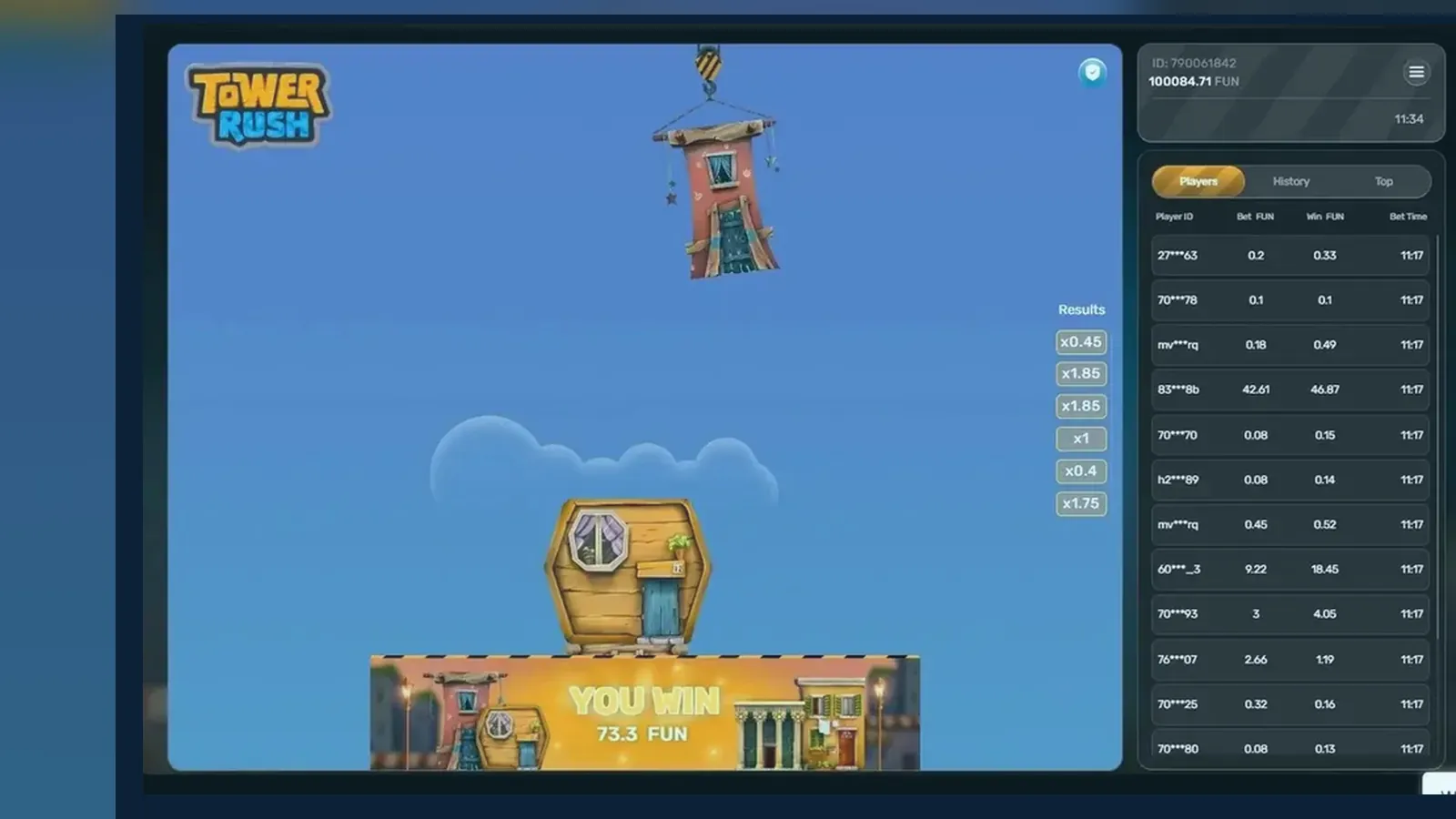
You could spend an afternoon reading reviews, or you could open the demo and press a few buttons. Both routes teach you something about Tower Rush, but the free version hides as much as it reveals. In the UK market, demo play sits behind age verification on most UKGC-licensed sites—no anonymous browsing, no instant click-through. That gate keeps minors out and ties the session to your account, so the operator knows you've tried the game when the deposit offer arrives.
The demo gives you £500.00 in pretend money, the full bet range from £0.10 to £5.00, and unlimited resets if you bust. What it doesn't give you is withdrawal friction, document checks, or the psychological weight of watching real funds disappear. Here's what the first 10 minutes, the first hour, and the first week of free play actually show—and where the gaps sit.
The First 10 Minutes: Mechanics and Muscle Memory
The demo loads the same interface you'll see in real-money mode: a live multiplier climbing from 1.00×, a tower graphic that rises with it, and a cash-out button that glows green until the round crashes. You pick a stake, press start, and decide when to bail. The first few rounds feel identical to the real game because the client-side behaviour is identical—same animation speed, same sound cues, same one-second freeze before the crash number appears.
Within 10 minutes you'll notice three things: the pace is fast (12–15 rounds a minute if you're clicking quickly), the tower crashes below 2.00× more often than it sails past 5.00×, and your demo balance swings by £50.00 or more in a handful of rounds. That volatility is real—it's built into the RNG and the RTP model—so the demo teaches you what a losing streak looks like without the sting of actual loss.
- Bet slider: £0.10 minimum, £5.00 maximum (the UKGC stake cap for online slots; crash games fall under the same limit).
- Auto cash-out: you can set a target multiplier (say, 2.50×) and the game bails automatically if the tower reaches it.
- Provably fair hash: the demo shows the same server-seed verification link you'd see in real mode, but you're not risking money so most players skip it here.
- Balance resets: tap the « reload » icon in the corner and your £500.00 comes back, no questions asked.
The First Hour: Pattern Recognition and False Confidence
An hour of demo play puts you through 700–900 rounds if you're playing at top speed, and that sample size starts to reveal the game's distribution. You'll see the tower crash below 1.50× in roughly half the rounds, sail past 3.00× maybe once every 10 spins, and hit double digits so rarely that it feels like a bug when it happens. Those ratios match the published RTP structure—Tower Rush doesn't post a single RTP percentage because the return depends on when you cash out, but the crash curve is weighted to punish late exits.
The danger in the first hour is pattern recognition. Your brain will spot streaks—three crashes below 1.20× in a row, then a 6.00× payout—and invent a rhythm that isn't there. The demo uses the same certified RNG as real-money mode, which means every round is independent and past results don't influence future outcomes. If you find yourself thinking « it's due for a high multiplier », the demo has taught you the wrong lesson.
The demo balance fluctuates wildly because you're probably experimenting with bet sizes and cash-out points. That experimentation is useful—it shows you how quickly £50.00 disappears at £2.00 a round if you're chasing 5.00× and missing—but it doesn't replicate the emotional friction of watching your own deposit drain. The « reload » button removes consequences, so the hour teaches mechanics but not discipline.
What Carries Over to Real Money (and What Doesn't)
The demo's bet range, multiplier curve, and interface layout all carry over to real-money mode without change. The muscle memory you build—knowing where the cash-out button sits, understanding the one-second server delay before the crash number locks—transfers directly. The maths doesn't change either: the RNG that governs the demo is the same certified algorithm that runs when you're playing with GBP, so the crash distribution you observed in free play is the distribution you'll face for real.
What doesn't carry over is the emotional texture. The demo balance resets for free; your real deposit doesn't. The demo session never asks for documents, never makes you wait 24 hours for a withdrawal, and never triggers an affordability check when your net deposits cross £150.00 in a month. Those frictions—KYC, withdrawal timelines, affordability reviews—are invisible in the demo and unavoidable in real play.
| Element | Demo | Real money | |
|---|---|---|---|
| Bet range | £0.10–£5.00 | £0.10–£5.00 (or £0.10–£2.00 if aged 18–24) | → |
| RNG and crash curve | Certified algorithm | Same certified algorithm | → |
| Interface and controls | Identical | Identical | → |
| Balance resets | Unlimited, instant | Top up via deposit only | → |
| Withdrawal | Not available | 24 h–3 days; documents required | → |
| Affordability checks | None | Triggered from £150.00 net deposits/month | → |
Demo on a Phone: Same Game, Smaller Buttons
The mobile demo runs in the browser—no dedicated app, no APK download. You log in to the casino site, find Tower Rush in the lobby, and tap « demo » or « free play » (the label varies by operator). The game scales to fit your screen, the tower graphic shrinks, and the cash-out button moves to thumb-reach. The bet slider becomes a vertical strip on the left edge, and the multiplier history scrolls horizontally below the main chart.
Everything that worked on desktop works on mobile, but the smaller interface demands more precision. If your thumb hovers over « cash out » and you miss the tap, the tower crashes before you get a second chance. The one-second server delay feels longer on a phone because you can't see the full chart at a glance—you're scrolling or zooming to check the multiplier history, and that split-second distraction costs you the exit window.
- Touch controls: the cash-out button is larger on mobile to reduce mis-taps, but the auto cash-out toggle (the small icon in the corner) is easy to miss.
- Landscape mode: the game works in portrait or landscape; landscape gives you more chart real estate but less room for the bet controls.
- Connection: the mobile demo needs a stable 4G or Wi-Fi connection; if the signal drops mid-round, the game freezes and you forfeit the bet (in real-money mode, the operator's fairness policy usually refunds a disconnected round, but the demo just resets).
- Battery: a 30-minute demo session at full brightness drains 8–10% of a typical phone battery; the live chart animation is the culprit.
The mobile demo is a useful test if you plan to play on a phone—it shows you whether the interface fits your screen and whether your reaction time is fast enough to catch a 3.00× exit on a small button. But it doesn't replicate the context of real mobile play: you're not going to sit on the sofa with your phone in one hand and a cup of tea in the other, tapping through 200 rounds at £1.00 a pop, while the demo balance magically refills.
The First Week: When Free Play Stops Teaching You Anything
A week of daily demo sessions—say, 20 minutes a day—puts you through several thousand rounds and teaches you exactly nothing new after the third day. By then you've seen the tower crash at every point on the curve, you've experimented with different cash-out strategies (early exits at 1.50×, late exits at 5.00×, auto cash-out at 2.00×), and you've discovered that no strategy beats the house edge in the long run. The RNG doesn't care when you cash out; it only cares that the aggregate RTP across all players hovers around the certified percentage.
What a week of demo play does reveal is your own behaviour under repetition. If you find yourself chasing losses—doubling the bet after a crash to « win it back »—the demo is showing you a habit that will cost you real money later. If you're calm after 10 losing rounds and walk away when the demo balance hits £50.00, that discipline will serve you well when you switch to real play. The demo is a mirror, not a teacher, and the longer you stare at it the clearer your reflection becomes.
What the Demo Hides Until You Deposit
The demo skips every piece of friction between « press start » and « cash out »: no deposit limits, no cooling-off period, no GAMSTOP check, no document upload. In real-money mode, you'll set a deposit limit during registration (mandatory under UKGC rules), and the operator will block further deposits once you hit that cap until the limit period rolls over. If your net deposits cross £150.00 in a month, the affordability check kicks in—at the first stage, the operator pulls credit-reference data to verify your income; at higher thresholds, they ask for payslips or bank statements.
The demo also hides withdrawal timelines. When you cash out in real mode, the operator checks your documents first (passport or driving licence, proof of address dated within three months, sometimes a photo of your debit card). That check takes 24–48 hours for the first withdrawal; subsequent cashouts are faster, but Faster Payments to your bank still take a few hours to two working days, and debit card refunds take one to three working days. The demo makes withdrawal feel instant because there's nothing to withdraw.
- Deposit limits: you set a daily, weekly, or monthly cap during registration; increasing the limit requires a 24-hour cooling-off period.
- Affordability checks: start at £150.00 net deposits per month (the UK's 2026 threshold); credit-reference data at stage one, documents at stage two.
- KYC documents: passport or driving licence, proof of address (utility bill, bank statement), sometimes a card photo; required before the first withdrawal.
- Withdrawal speed: e-wallets in a few hours to 24 hours, Faster Payments same day to two working days, debit card one to three working days; first withdrawal always slowest due to document review.
- GAMSTOP: if you've self-excluded via the UK's national scheme, the demo won't load—the operator checks your details against the GAMSTOP register during age verification.
The demo also skips bonus wagering. If you claim a welcome offer, the bonus funds come with a playthrough requirement—typically 35× the bonus amount in the UK. Tower Rush counts 100% towards wagering (one £1.00 bet = £1.00 of wagering progress), but you can't withdraw until you've cleared the requirement or forfeited the bonus. The demo balance has no wagering attached, so it doesn't teach you how long 35× takes or how often you'll bust before you finish.
Switching to Real Money: The Lowest-Risk Route
If the demo convinced you to try real play, the lowest-risk route is a small deposit with a tight session budget. Open the site, check the UKGC licence number in the footer against the register (every legal operator in the UK holds a remote gambling licence and publishes the number), and complete age verification if you haven't already. Set a monthly deposit limit during registration—say, £50.00—and make your first deposit via debit card (credit cards have been banned for gambling in the UK since 2020) or PayPal.
Start with the minimum bet (£0.10 or £0.20, depending on the operator's floor) and play at the same pace you used in the demo—no faster. Set a session loss limit before you start: decide you'll stop at -£10.00 or -£20.00, and walk away when you hit it, even if the tower just crashed at 1.05× and you « know » the next round will hit 5.00×. That discipline is harder in real play than it sounds, which is why the demo's unlimited resets are a trap—they train you to ignore stopping points.
- Check the UKGC register: operator name, licence number, and status (active) must match the footer details.
- Set a deposit limit: £50.00/month is a common starting point; you can increase it later after a 24-hour cooling-off period.
- Complete KYC early: upload your documents during registration to avoid withdrawal delays later; most operators accept a driving licence and a recent bank statement.
- Claim or skip the bonus: welcome offers often come with 35× wagering; if you'd rather skip the requirement, deposit without entering a bonus code.
- Start at the minimum bet: £0.10 or £0.20 per round, same cash-out strategy you tested in the demo.
- Set a session loss limit: decide your stop point before you start (say, -£20.00) and stick to it; the demo taught you the game, not the discipline.
FAQ
Does the demo use the same RNG as real-money Tower Rush?
Yes. The demo runs the same certified random number generator that governs real-money rounds, so the crash distribution you see in free play matches what you'll face when you deposit. The difference is consequences: the demo balance resets for free, your real deposit doesn't. The maths is identical; the emotional weight isn't.
Can I play the demo without registering on a UK site?
Most UKGC-licensed operators require age verification before you can load any game, including the demo. You'll need to create an account, confirm your age (18+), and pass an automated check against GAMSTOP (the UK's self-exclusion register) before the demo unlocks. A few sites allow guest play without registration, but that's increasingly rare under the UK's safer-gambling rules.
Why does the demo show a £5.00 stake cap when I'm 22?
The demo displays the full bet range (£0.10–£5.00) regardless of your age, but real-money play enforces the £2.00 stake cap for players aged 18–24. The operator's system reads your date of birth from your account and locks the slider at £2.00 once you switch to real mode. If you're 25 or over, the £5.00 cap applies—that's the UKGC's online slot stake limit, which also covers crash games.