What the Numbers Actually Mean When You Play Tower Rush
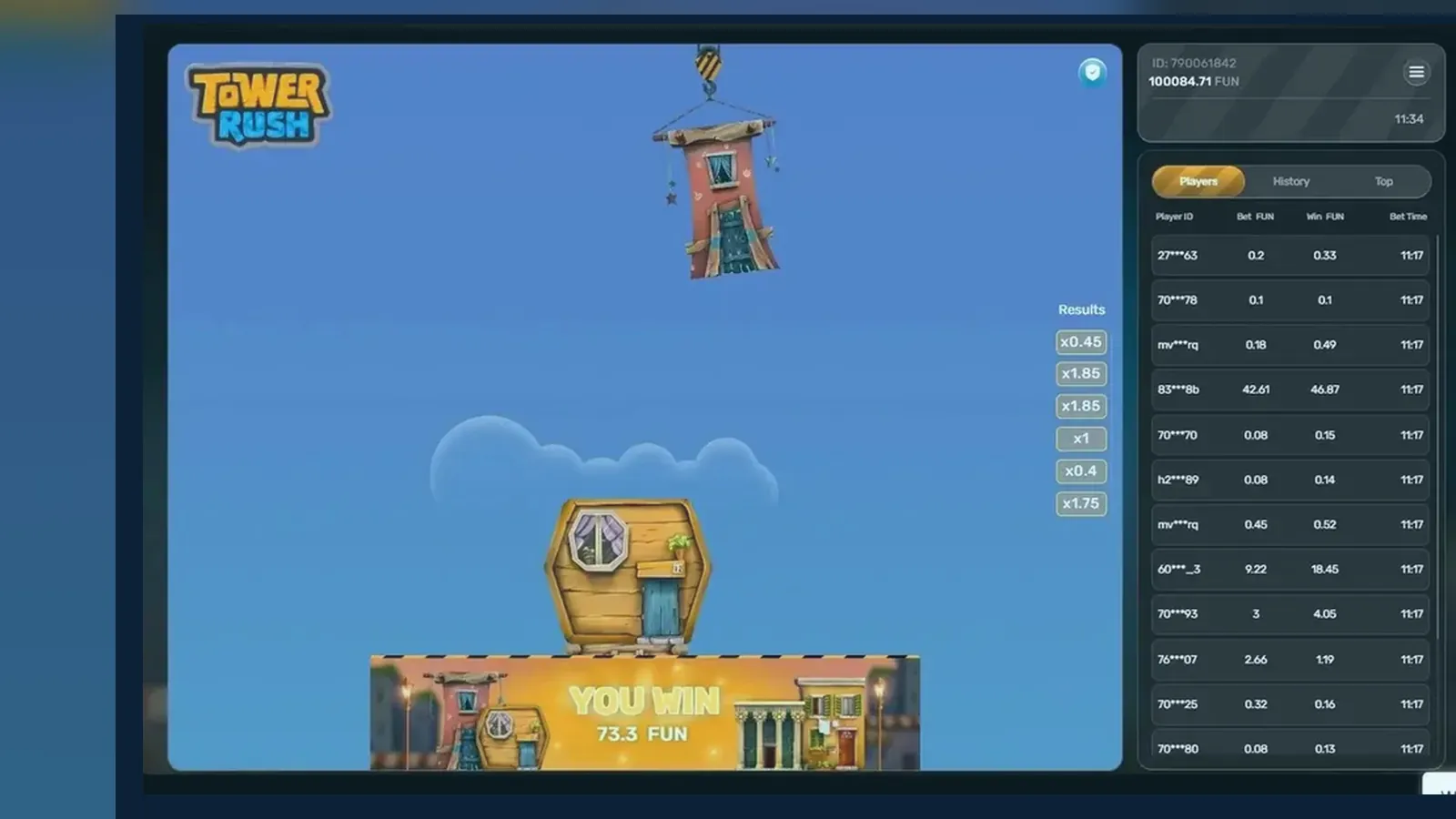
Since April 2026, every licensed operator in the UK pays 40% Remote Gaming Duty, and players face affordability checks from £150 net deposits a month. That changes how you approach a game like Tower Rush: smaller stakes, tighter budgets, and less room for chasing losses.
This review walks through what Tower Rush is, how the maths works in a real session, and whether it suits a cautious bankroll. You will see scores for pace, mobile play, and bonus-friendliness, three alternatives for different play styles, and a first-session plan in pounds.
The Verdict First: Who Should Play This and Who Should Skip It
Tower Rush is a multiplier-ladder game where you climb floors for rising payouts and cash out before the tower collapses. It suits players who want fast rounds, manual control over risk, and no bonus-round waiting. Skip it if you prefer slot features, want guaranteed base-game wins, or dislike the pressure of a ticking decision.
The game runs in-browser on UKGC-licensed sites, so you will see the £5 stake cap (£2 if you are 18–24) and GAMSTOP protection. Demo play requires age verification on most operators, and your first withdrawal will take 24–48 hours while they check your documents.
- Good for: players who want control, fast pace, and no feature grinds
- Bad for: anyone chasing bonus rounds or expecting steady base-game hits
- Budget: works from £20 upward, but you need discipline to stop after a few losing streaks
Scores and What They Mean in Practice
| Criterion | Score | Reason |
|---|---|---|
| Maths transparency | 8/10 | RTP is disclosed, multiplier ladder is fixed, but house edge per floor is not always shown |
| Pace | 9/10 | Rounds last 10–30 seconds; you control the speed by cashing out or climbing |
| Mobile | 9/10 | Touch controls are quick, no lag on 4G, fits a phone screen without zooming |
| Design clarity | 7/10 | Clean layout, but the collapse animation can feel abrupt when you are deciding |
| Bonus-friendliness | 5/10 | High volatility burns through wagering fast; small wins do not stretch the requirement |
| Value for small bankroll | 6/10 | You can play £0.50 rounds, but losing streaks hit harder without base-game consolation wins |
The maths: if the game shows 96% RTP, the house keeps 4% of all stakes over time. In a £50 session at £1 per round, you would expect £48 back on average, but variance means you might see £30 or £70 in practice. The multiplier ladder compresses risk—early floors pay less but collapse less often; high floors pay more but collapse more. That is where the house edge hides.
How a Real Session Plays Out on £50
You start with £50, betting £1 per round. You climb three floors and cash out at 2.5× for a £2.50 win. Next round collapses at floor two, you lose £1. Another round, you push to 4× and cash out £4. Over 20 rounds, you win eight, lose twelve, and finish with £46. The game gave you decisions, but the maths took £4.
Now imagine you raise stakes to £2 after three losses, chasing the £4 back. The tower collapses again. You have burned £8 in four rounds. That is how volatility punishes impatience, and why you need a stop rule before you start.
Mobile Play: Does It Hold Up on a Commute?
Tower Rush runs as a web app, so no download from the App Store or Google Play. You log in through the operator's mobile site, and the game loads in seconds on 4G or 5G. Touch controls are responsive—tap to climb, tap to cash out—and the multiplier updates without lag.
The design scales to a phone screen without horizontal scrolling. The tower sits in the centre, the cash-out button is thumb-friendly, and your balance updates in real time. The only friction is the collapse animation: it is quick, but if you are deciding whether to climb or cash out and the tower falls, it feels like the game rushed you.
- Loads in under 3 seconds on a London 5G connection
- No accidental taps—buttons are spaced for thumbs
- Battery drain is normal for a browser game, not a native app
- Works on older phones (tested on an iPhone 11 and a Samsung from 2021)
How It Behaves on a Welcome Bonus
Most UKGC operators cap welcome bonuses at £100 and attach 35× to 50× wagering. If you take £50 bonus cash at 40× wagering, you need to turn over £2,000 before you can withdraw. Tower Rush counts 100% toward that requirement, but volatility is the problem.
Because the game produces losing streaks, you will burn through bonus funds faster than on a low-variance slot. A 10× win might spike your balance, but you still need hundreds of rounds to clear the wagering, and most of those rounds will lose. The result: you either clear the bonus with a small profit or lose the lot before you finish.
Pros, Cons, and What They Mean for Your Bankroll
- Pro: You control when to cash out, so you are not waiting for a feature to land
- Pro: Fast rounds mean you can play a full session in 20 minutes or stop after five rounds
- Pro: The multiplier ladder is fixed, so you know the risk before you climb
- Pro: Works smoothly on mobile without app installation
- Con: No base-game consolation wins—if the tower collapses, you lose the full stake
- Con: High variance produces long losing streaks that test your discipline
- Con: The collapse animation can feel rushed when you are mid-decision
- Con: Bonus wagering is fast but draining; most players will not clear it
The biggest trade-off is control versus safety. You decide when to cash out, but the game offers no small wins to soften a losing run. If you bet £1 and lose six rounds in a row, you are down £6 with nothing to show. Compare that to a slot where you might lose £6 but collect £0.40 and £0.80 along the way—it feels less brutal.
Three Alternatives and When to Pick Them Instead
| Game | When to Pick It | Key Difference |
|---|---|---|
| Aviator | You want the same crash-game format but with a smoother mobile interface and more operators offering it | Larger player base, more demo availability, same maths |
| Plinko | You prefer watching a ball drop through pegs rather than making active decisions each round | Lower cognitive load, slower pace, less stressful |
| Starburst (slot) | You want frequent small wins and no decision pressure, even if the RTP is lower | Low variance, spins under 5 seconds, no collapse anxiety |
If you like the crash-game format but want more operators to choose from, Aviator is the safer bet—more sites carry it, and demo play is easier to find. If you want the speed but less decision fatigue, Plinko removes the cash-out choice and replaces it with pure chance. If you are new to online casino play and want something forgiving, Starburst pays often enough that your bankroll lasts longer, even if the big wins are smaller.
What Players Say (and What to Ignore)
Player opinions are useful for spotting interface bugs or withdrawal delays, but they are not proof of payout rates. RTP is fixed by the provider, not by the operator, and single-session anecdotes do not override the maths. Here are four opinions from forums and app reviews, marked clearly as opinions:
- «I played 30 rounds at £1 each, cashed out early every time, and finished £8 up. Feels fairer than slots.» — Observation: conservative play can produce small profits, but 30 rounds is not a statistical sample.
- «Lost £40 in ten minutes chasing a 10× win. The tower collapsed at floor four every single time.» — Observation: variance produces clusters of losses; this is normal for high-volatility games, not a sign of rigging.
- «Withdrawal took three days because they wanted proof of address. After that, Faster Payments landed in six hours.» — Observation: first withdrawals are slow due to KYC; repeat withdrawals are faster, as the profile says.
- «Mobile version is smooth, but the collapse happens so fast I tapped cash out and still lost.» — Observation: network latency or animation timing can make the button feel unresponsive; this is a UX issue, not a payout issue.
FAQ
Is Tower Rush legal to play in the UK?
Yes, if the operator holds a UKGC remote licence. Check the operator's footer for the licence number and look it up in the UKGC public register. Unlicensed sites are illegal to market here, and you will not be protected if something goes wrong. Every UKGC-licensed site applies GAMSTOP, so if you have self-excluded, you will be blocked automatically.
How much can I bet per round under UK rules?
The stake cap is £5.00 per round if you are 25 or older, and £2.00 if you are 18–24. The operator enforces this automatically based on the age on your verified account. You cannot override the cap, and it applies to all crash games and slots on UKGC-licensed sites.
Why did my first withdrawal take two days?
UKGC rules require operators to verify your identity and address before processing the first withdrawal. They will ask for a photo ID and a recent utility bill or bank statement. Once approved, repeat withdrawals via Faster Payments usually land the same day or within two working days. This delay is normal and applies to every licensed operator.
Can I play Tower Rush for free to practise?
Demo play is available on many UKGC sites, but you need to log in and pass age verification first. Some operators only show free play after you have made a deposit. If you want to test the game without spending, look for operators that offer demo mode to verified accounts before the first deposit, but expect to provide ID either way.
Does Tower Rush pay better at certain times or after a losing streak?
No. Each round is independent and uses a random number generator. The game does not track your history, time of day, or bet size to adjust outcomes. The RTP is fixed across all sessions, and losing streaks are a normal feature of high-variance maths. If you see patterns, that is your brain finding order in randomness, not the game behaving differently.